A Venture Capital Titan’s Stark Warning: AI’s Wealth Boom Demands Redistribution, Voluntarily or Not

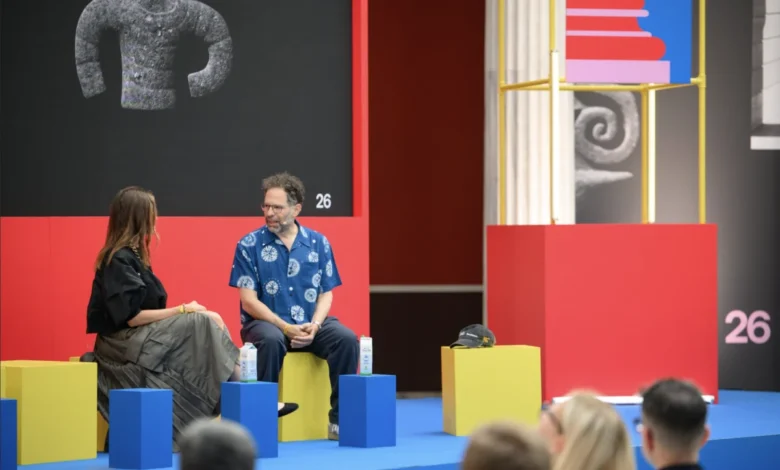
In the vibrant heart of Athens, amidst the hum of innovation at a burgeoning tech festival, Neil Rimer, a co-founder of the highly successful venture capital firm Index Ventures, delivered a pronouncement that has resonated deeply within the technology and finance spheres. During a private conversation in late May, Rimer articulated a "strong sense that there will be some sort of a redistribution" of the immense wealth accumulating around artificial intelligence. He elaborated, stating, "It’ll either be voluntary or it’ll be involuntary, but it’ll happen, and I hope it’s voluntary," adding his belief that tech leaders "can play a leading role in seeing that through." Coming from a figure of Rimer’s stature in the venture capital world, this statement carries significant weight, far beyond what might be dismissed as standard-issue populism.
Index Ventures, a firm that has consistently delivered exceptional returns over the past three decades, has raised approximately $15 billion from investors. In the preceding year, notable exits such as the initial public offering (IPO) of Figma and Google’s acquisition of the cybersecurity firm Wiz reportedly generated around $9 billion for Index. Rimer, who stepped back from day-to-day investment activities in 2021, now dedicates a substantial portion of his time to Athens, a city with deep personal ties. His unpretentious demeanor, evident in his attire of a rumpled button-down shirt and jeans during the interview, stands in contrast to the often more formal presentation of his peers.
Rimer’s engagement with societal contribution extends beyond his investment acumen. He serves on the board of Endeavor Greece, an organization dedicated to mentoring entrepreneurs in emerging markets. Previously, he chaired the board of Human Rights Watch from 2019 to 2025. Furthermore, in late 2021, Rimer and his family made a significant philanthropic contribution of $13 million to McGill University. This donation facilitated the renovation of a campus building, now named the Rimer Building, and established a new Institute for Indigenous Research and Knowledges.
The Timing of Rimer’s Comments: A Shifting Philanthropic Landscape
Rimer’s call for redistribution arrives at a critical juncture, as voluntary philanthropic efforts appear to be facing a decline in momentum, particularly among the ultra-wealthy. The Giving Pledge, a 2010 initiative by Warren Buffett and Bill Gates urging billionaires to commit at least half their fortunes to charity, has seen a noticeable slowdown in new signatories. While 113 families joined in its first five years, subsequent periods saw significantly fewer commitments, with only four families signing in 2024, according to a March report in The New York Times. This trend highlights a growing sentiment among some of the wealthiest individuals in the tech sector, where the concept of philanthropy is being re-evaluated. For instance, Elon Musk, the world’s wealthiest individual, has publicly stated that his businesses "are philanthropy," suggesting a redefinition of charitable giving.
This pattern is not isolated to the Giving Pledge. While total charitable giving in the United States reached a record $592.5 billion in 2024, the number of individual American donors has been on a downward trend for five consecutive years, experiencing a 4.5% decrease in 2024 alone, as reported by the Stanford Social Innovation Review. The proportion of households contributing to charity has fallen from 66% in 2000 to approximately 50% today. Data from Bank of America and the Lilly Family School further indicates a slip in giving even among affluent households, decreasing from 90% in 2017 to 81% in the past year.
Evidence from within the venture capital ecosystem, including Index Ventures’ own portfolio companies, corroborates this trend. The firm’s investments include Anthropic, a prominent AI company. Business Insider’s inquiries with financial planner Alex Caswell revealed that many of his newly wealthy clients, often employees of companies like Anthropic and proponents of effective altruism, are not prioritizing the donation of substantial portions of their fortunes. While Anthropic’s policy of matching employee donations of up to 25% of their equity to charity has been utilized by some clients, Caswell noted that the majority are not incorporating large-scale philanthropy into their long-term financial strategies. Instead, their focus is primarily on angel investing or launching their own ventures. "That’s what I’m seeing more than the desire to become philanthropic," Caswell stated.
The Emerging Landscape of Forced Redistribution
The apparent waning of voluntary giving is increasingly intersecting with legislative efforts aimed at achieving wealth redistribution through taxation. In California, voters are set to consider a one-time 5% wealth tax targeting the state’s billionaires. This proposed measure has already prompted some prominent figures, including Google founders Sergey Brin and Larry Page, to relocate their primary residences to South Florida to mitigate potential tax liabilities.
The prospect of an IPO for OpenAI in 2027, as reportedly considered by the company, may also be influenced by such tax considerations. The proposed California wealth tax, if passed, would assess net worth based on an individual’s worldwide assets as of the end of the current calendar year, potentially incentivizing actions to reduce taxable valuations.
However, these wealth redistribution proposals face significant opposition. Governor Gavin Newsom has expressed reservations, and economists have raised concerns, citing historical precedents in other industrialized nations where similar wealth taxes have led to the departure of wealthy residents and subsequent repeal of the legislation.
Alternative proposals for wealth distribution are also emerging, though they too are met with controversy. OpenAI has reportedly discussed granting the U.S. government a 5% equity stake in the company. While CEO Sam Altman has framed this as a mechanism for sharing AI’s economic benefits with the public, critics view it as an attempt to secure political protection. Nevertheless, the tech industry has historically been reluctant to incorporate government entities as shareholders. Veteran investor Roelof Botha humorously remarked on the potential apprehension, noting that "The most dangerous words in the world are: ‘I’m from the government, and I’m here to help.’"
The Scale of Unprecedented Wealth Concentration
The sheer magnitude of wealth concentrated in the hands of a few individuals is staggering. Elon Musk recently became the first person to achieve a net worth exceeding $1 trillion following SpaceX’s IPO. Forbes’ 2026 rankings identified 45 new AI billionaires, collectively possessing $2.9 trillion, a figure that predates the public offerings of Anthropic and OpenAI. A Business Insider report highlighted that upon their respective IPOs, employees of Anthropic and OpenAI could collectively hold enough wealth to purchase nearly a third of all homes in the San Francisco metropolitan area.
While this level of wealth concentration may feel unprecedented, its historical context warrants examination. The share of wealth held by the top 1% of U.S. households reached 31.7% in the third quarter of the past year, a record since the Federal Reserve began tracking this data in 1989. This figure is roughly equivalent to the total wealth held by the remaining 90% of households outside the top decile.
This concentration, however, remains below the peak of the Gilded Age in 1916, when the top 1% commanded 45% of wealth. Yet, when focusing on the very wealthiest individuals, the picture shifts dramatically. Renowned economist Gabriel Zucman’s research indicates that around 1910, the four largest fortunes in America accounted for 4% of U.S. GDP. Today, a comparable sliver of the population – now comprising 19 households – holds wealth equivalent to 14% of U.S. GDP.
Historical Precedents for Redistribution
Rimer’s dichotomy of voluntary versus involuntary redistribution finds historical parallels in periods of extreme wealth concentration in American history. In 1889, at the zenith of the first Gilded Age, Andrew Carnegie penned "The Gospel of Wealth," arguing that wealthy individuals should treat their fortunes as trusts to be distributed for public good during their lifetimes, deeming it a disgrace to die wealthy. This essay became a foundational text for modern philanthropy and a precursor to the Giving Pledge.
However, voluntary efforts alone did not prevent the emergence of forced redistribution. By the mid-1930s, Louisiana Senator Huey Long galvanized national support with his "Share Our Wealth" program, advocating for steep taxes on the affluent to fund a guaranteed income for all Americans. In response to Long’s growing popularity among working-class voters, President Franklin D. Roosevelt enacted what the press termed the "soak-the-rich tax," which significantly increased the top marginal income tax rate to as high as 79%. While this measure redistributed less wealth than Long had proposed, it stands as a pivotal example of politically mandated redistribution, enacted when voluntary giving proved insufficient to address societal pressures stemming from extreme inequality.
Rimer’s Evolving Perspective on Tech’s "Moral Center"
These historical dynamics are not lost on Rimer, whose career has been deeply embedded in the technology sector. He expresses a particular fascination with the "moral center of tech companies," a curiosity that dates back to his undergraduate days at Stanford in 1984. At that time, companies like Apple, which offered discounted Macintoshes to students, and their founders were viewed as "heroes" for creating innovations perceived as genuinely beneficial to society.
What troubles Rimer today, he notes, is observing his own children discussing certain technology companies with a sentiment that mirrors how previous generations spoke about defense contractors or the tobacco industry. This shift in perception reflects a growing unease about the societal impact and ethical considerations surrounding dominant technology firms.
Critics may point out that Rimer, as an investor in companies like Anthropic, is a direct beneficiary of the very wealth he suggests requires redistribution. However, his stated preference is for his fellow beneficiaries to proactively choose to contribute to societal well-being rather than face external mandates. Rimer appears to be betting on the possibility that the easier path – voluntary contribution – will be chosen before historical forces necessitate a more challenging, involuntary redistribution. The ongoing debate surrounding AI’s economic impact and the evolving landscape of philanthropy and taxation will undoubtedly shape the future of wealth distribution in the years to come.